
This post covers why beginners tend to quit in the first few weeks and what to change so you keep going. You'll get a simple weekly plan, a way to make sessions easier to start, and a short list of what's worth recording.
At Washitsu we build Yuru Gori, a workout log for people just starting out, and the ideas below shaped how we designed it. The short version: the people who keep going are often not the most motivated. They are the ones whose plan is small enough to survive a bad week.
Start with fewer days than you think you can manage
The usual beginner plan is ambitious: five days a week, an hour each time. It works for about ten days. Then a late night at work or a cold wakes you up to the fact that you've missed three sessions, and the whole plan feels broken.
A plan you can keep on your worst week is worth more than one that only works on your best. Two or three days a week is plenty for a start. Pick the days in advance and treat them like any other appointment. If you finish the month and still want more, add a day then. Adding is easy. Recovering from a plan that collapsed is hard.
It also helps to count weeks, not single days. "Three sessions this week" survives a skipped Tuesday. "Every Monday, Wednesday and Friday" does not.
Make each session easy to begin
Many skipped workouts are lost in the first five minutes, while you're still deciding what to do. Standing in the gym, scrolling for ideas and guessing at a weight is tiring before you've lifted anything.
Decide the session before you arrive. Write down four or five exercises with sets and reps, so you only have to follow the list. Keep it short: twenty minutes you actually do is better than an hour you put off.
If getting to the gym is the hard part, have a home version of the same session ready. Bodyweight squats, glute bridges and calf raises need no equipment. On days when you can't go out, the home version keeps the habit alive.
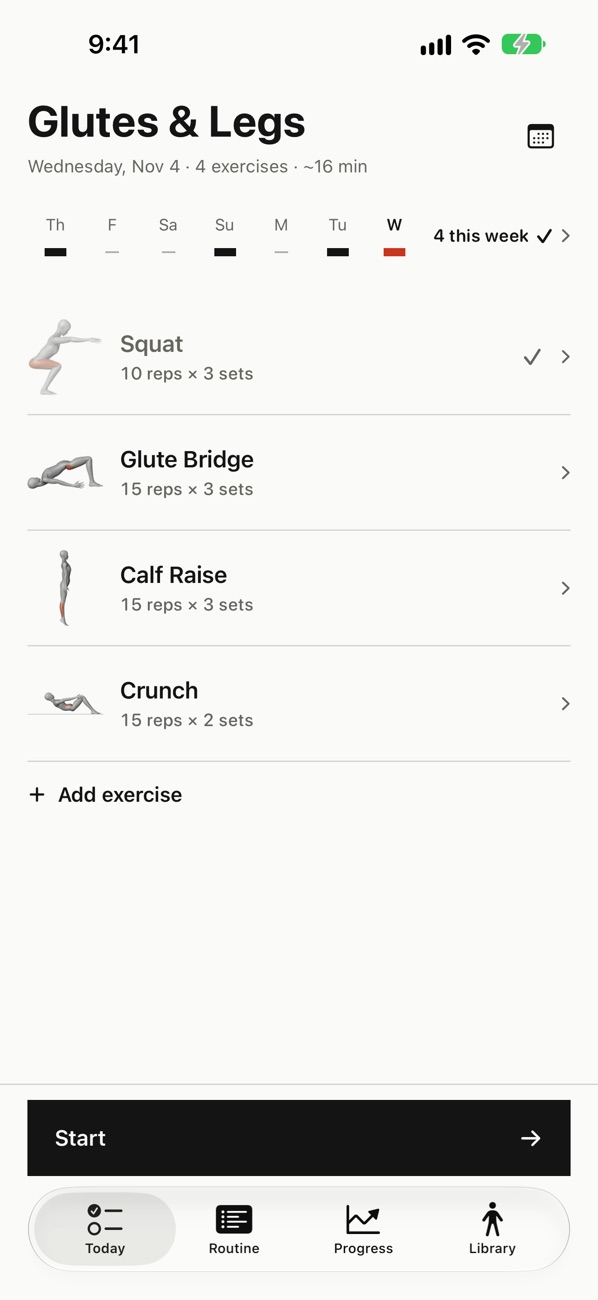
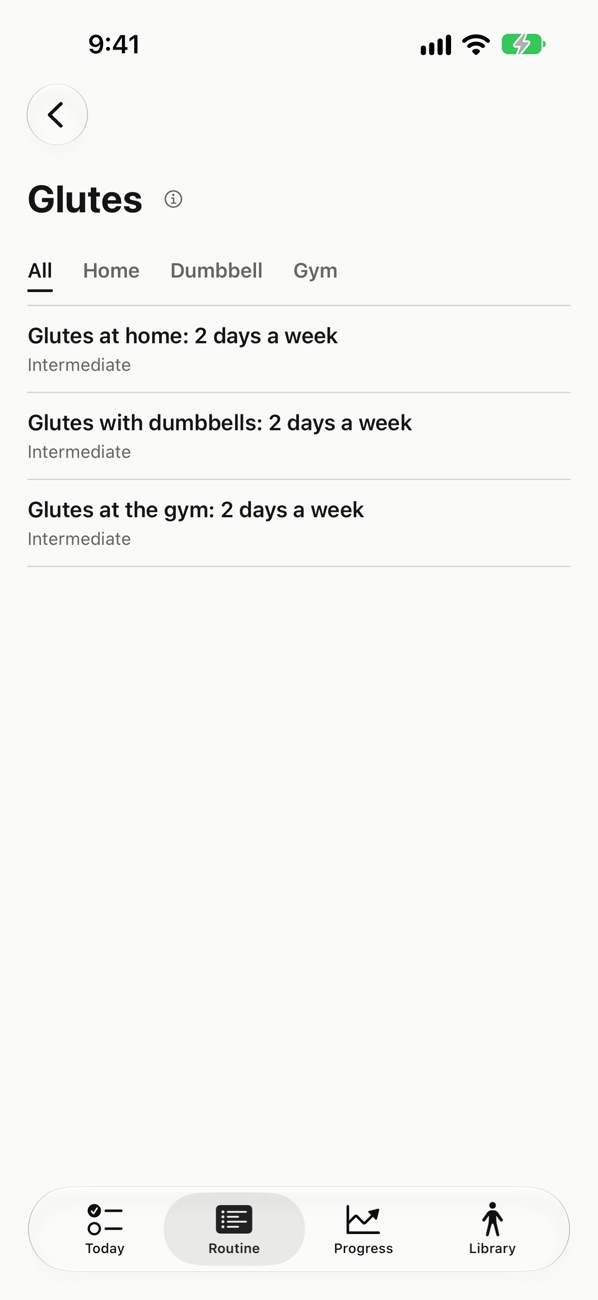
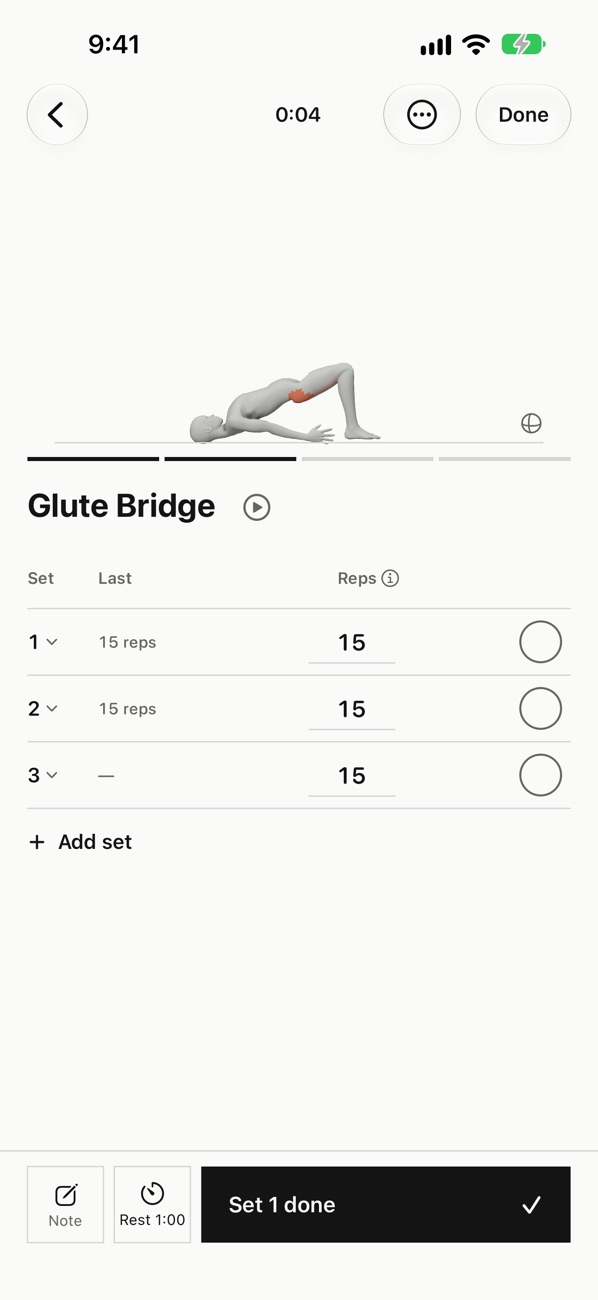
Yuru Gori is built around this idea. Open the app and today's exercises are already listed, and routines can be filtered by home, dumbbells or gym, so a missed gym trip doesn't have to be a missed session.
Write down three numbers, and only three
Beginners often quit because they can't see any change. A log fixes that, but only if it's quick enough to keep. For each exercise, write the weight, the reps and the number of sets. That's all.
Next time, look at those numbers before you start. If last week's set felt manageable, add one rep or a small amount of weight. If it felt hard, repeat it. This turns each session into a small, clear task instead of a guess.
Two habits make the log easier to keep:
- Log right after each set, not at the end. You won't remember the details 40 minutes later.
- Keep the log where you already are. A phone you carry anyway beats a notebook left at home.
Over a few weeks, these numbers show progress you won't notice in the mirror, and that is often what keeps people coming back.
Pick a starting weight that feels a little too light
Starting too heavy is an easy way to put yourself off. Sore joints, bad form and a session that feels miserable all make the next one harder to face.
Choose a first weight you could lift a few more times than the plan asks for. Use the first two weeks to learn how each movement should feel. Watching a short demo before you start, and checking which muscles the exercise is meant to work, saves a lot of guessing. You can always add weight next time. You can't undo a week off from a strained shoulder.
Expect a gap, and plan your return
Almost everyone misses a week at some point: travel, illness, a busy month. The habit usually breaks after the gap, when coming back feels like starting over.
Decide now what your return looks like. Go back to the same days, drop the weights a little and do a shorter session. Treat it as a normal week, not a test. One easy session gets you back on the list, which matters more than making up for the time you missed.
It also helps to keep your goals about showing up rather than about your body. "Three sessions this week" is something you control. Results vary from person to person, and training one area doesn't burn fat only from that area.
This post is general information, not medical or fitness advice. If you have an injury, a health condition or any doubts, check with a doctor before starting a new exercise routine.
A simple setup to get started
Here is the whole approach in one place:
- Two or three fixed days a week, counted by the week
- A short list of exercises decided before you arrive, with a home version
- Weight, reps and sets logged after every set
- A starting weight that feels a little too light
- A plan for coming back after a missed week
If you'd like a tool that handles the list and the log for you, Yuru Gori shows today's exercises when you open it, suggests a starting weight from your body weight, and includes a short demo video and a muscle diagram for all 142 exercises. It's free and needs no sign-up, and your records stay on your device.